

The Scan That Could Save Your Life: A Real Guide to Breast Cancer Screening

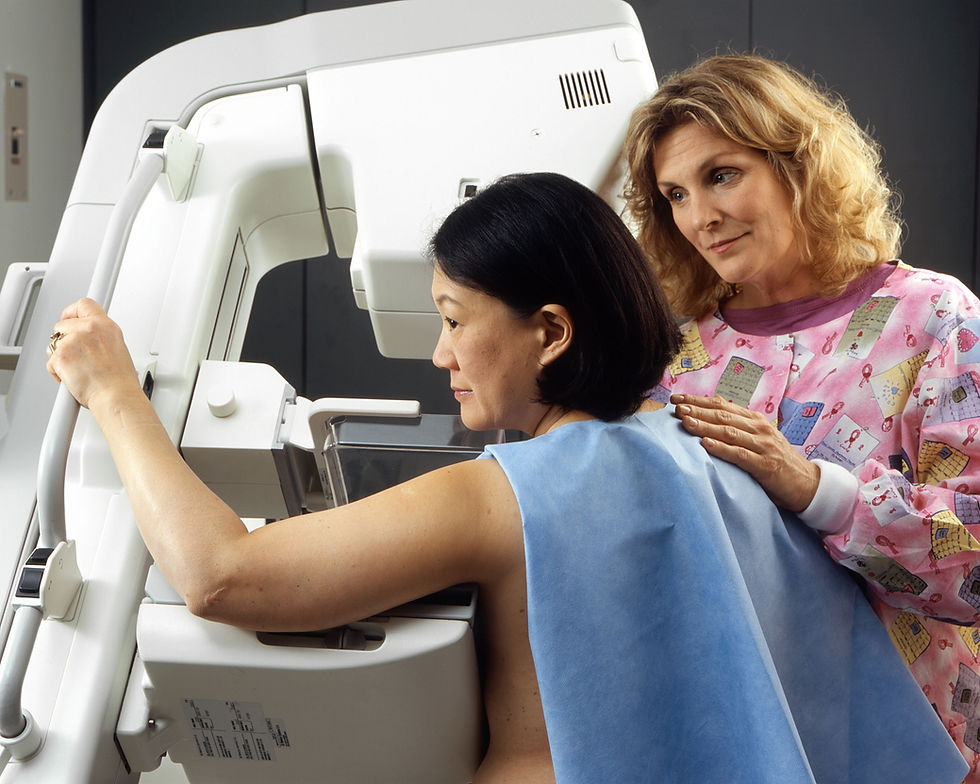
Most breast cancers are found before they can be felt — not by accident, but because someone showed up for a mammogram on a day that felt entirely ordinary. That's the quiet power of screening: catching disease before it announces itself.
Why This Actually Matters
Cancers found early are easier to treat, survival rates climb sharply, fewer patients need aggressive therapy, and overall mortality drops. Screening doesn't prevent breast cancer — it prevents late breast cancer, which is the version that's hardest to beat.
When Should You Start?
Ages 40–49: Screening every 1–2 years, guided by personal risk and a conversation with your provider
Ages 50–74: Routine mammograms every 2 years (or annually, depending on where you live)
Ages 75+: Based on overall health and life expectancy, not age alone
High-risk individuals: May need earlier and more frequent screening, including MRI
High-risk includes BRCA1/BRCA2 mutations, a strong family history, prior chest radiation, dense breast tissue, or certain genetic syndromes.
Your Screening Toolkit
The mammogram remains the primary tool — it can catch tumors before they're large enough to feel. Breast MRI is more sensitive and reserved for high-risk patients. Ultrasound helps when mammograms are unclear or breast tissue is dense. A clinical breast exam adds a hands-on check. And simple self-awareness — knowing what's normal for your body — means you're more likely to notice when something changes.
The Dense Breast Wrinkle
Dense breast tissue does two things at once: it makes mammograms harder to read, and it independently raises cancer risk. If this applies to you, ask about supplemental ultrasound or MRI, and consider more frequent screening.
Decoding Your Results: BI-RADS
Your mammogram report will include a BI-RADS score:
0 — needs more imaging
1 — normal
2 — benign
3 — probably benign, short-term follow-up recommended
4 — suspicious, biopsy recommended
5 — highly suspicious
6 — known cancer, already confirmed
What Actually Stands in the Way
Transportation. Cost. Provider bias. Gaps in health literacy. Fear and anxiety. Cultural safety concerns. Limited access in rural or remote areas. None of these are small — they're the real reasons screening rates lag in some communities more than others.
How Ask Eddie Helps
Ask Eddie explains what your results actually mean, clarifies BI-RADS categories in plain language, helps you prepare the right questions for a follow-up, and supports you through a process that can feel more stressful than it needs to be.
Reviewed by Dr. Derrick J. Beech, MD, FACS, Surgical Oncologist
Sources: U.S. Preventive Services Task Force — Breast Cancer Screening; American Cancer Society — Breast Cancer Screening


Comments